HVAC ANSWERS · INDOOR AIR QUALITY
Musty or dirty-sock odor
All guidance with direct answers, useful observations, and clear next steps.
Updated
Quick answer
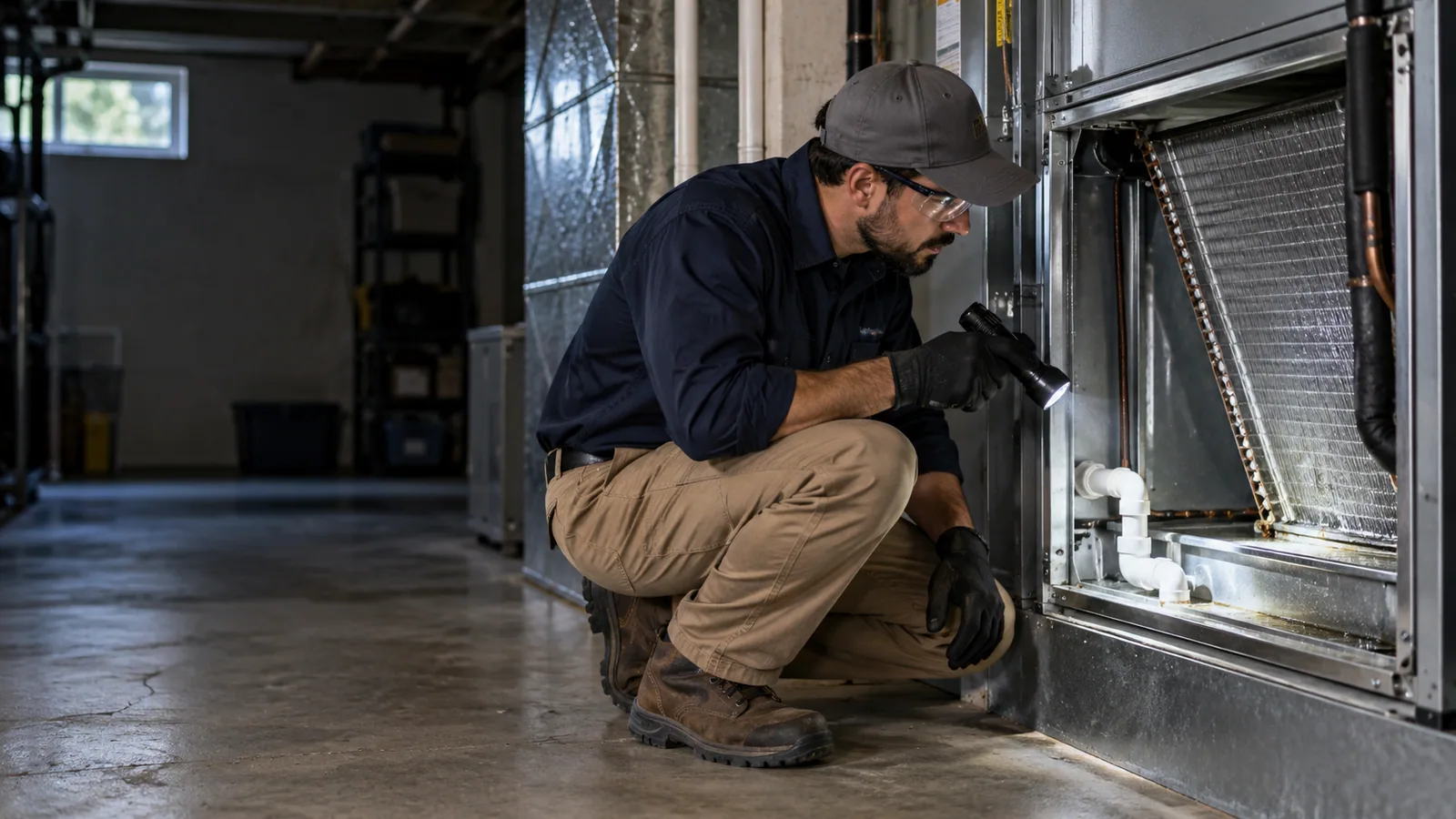
A musty odor suggests moisture or a contaminant source that should be located rather than covered with fragrance. Possible areas to inspect include drainage, the cooling coil and pan, nearby insulation, duct materials, filters, and building moisture. HVAC equipment cannot confirm whether a substance is mold; visible growth, recurring water, or health concerns may require an appropriately qualified moisture or indoor-environment professional.
Understand the issue
A musty smell points toward a moisture or contamination investigation, but it does not identify mold by itself. The source may be the equipment, drainage, ducts, or a damp part of the building whose air enters the system.
Your questions, answered
Why does the AC smell musty?
Inspect for moisture sources rather than covering the smell. Condensate problems, damp materials, coil contamination, or air drawn from a damp space can contribute; odor alone does not establish the exact source.
My vents have a dirty sock smell.
The description is commonly used for an odor noticed during equipment operation, but it is not a confirmed diagnosis. Ask for inspection of the coil, pan, drainage, and surrounding building conditions.
The air smells damp when cooling starts.
Note whether the smell appears only at startup, throughout cooling, or even when the system is off. That timing helps distinguish equipment-associated moisture from a more persistent building source.
What causes a moldy HVAC odor?
Mold growth requires moisture, but other materials can also smell musty. Correct the water problem and establish the affected area before deciding what cleaning or remediation is necessary.
There is a stale smell from the registers.
A stale smell may reflect ventilation, odors entering returns, damp materials, or contamination. Check the context and source instead of assuming that duct cleaning or a scented filter will solve it.
What to do next
When to get help
If HVAC mold contamination is suspected, avoid operating the affected system pending evaluation. Persistent moisture or extensive damage may require a building or remediation specialist.
Sources and further reading
These references support the topic's technical background. For equipment-specific procedures, use the instructions for the exact model; for permits and compliance, check with the responsible local authority.
Educational guidance from HVACentric. Conditions at a property require direct assessment; these pages do not diagnose equipment or certify an installation.