HVAC ANSWERS · COMMERCIAL AND INDUSTRIAL HVAC
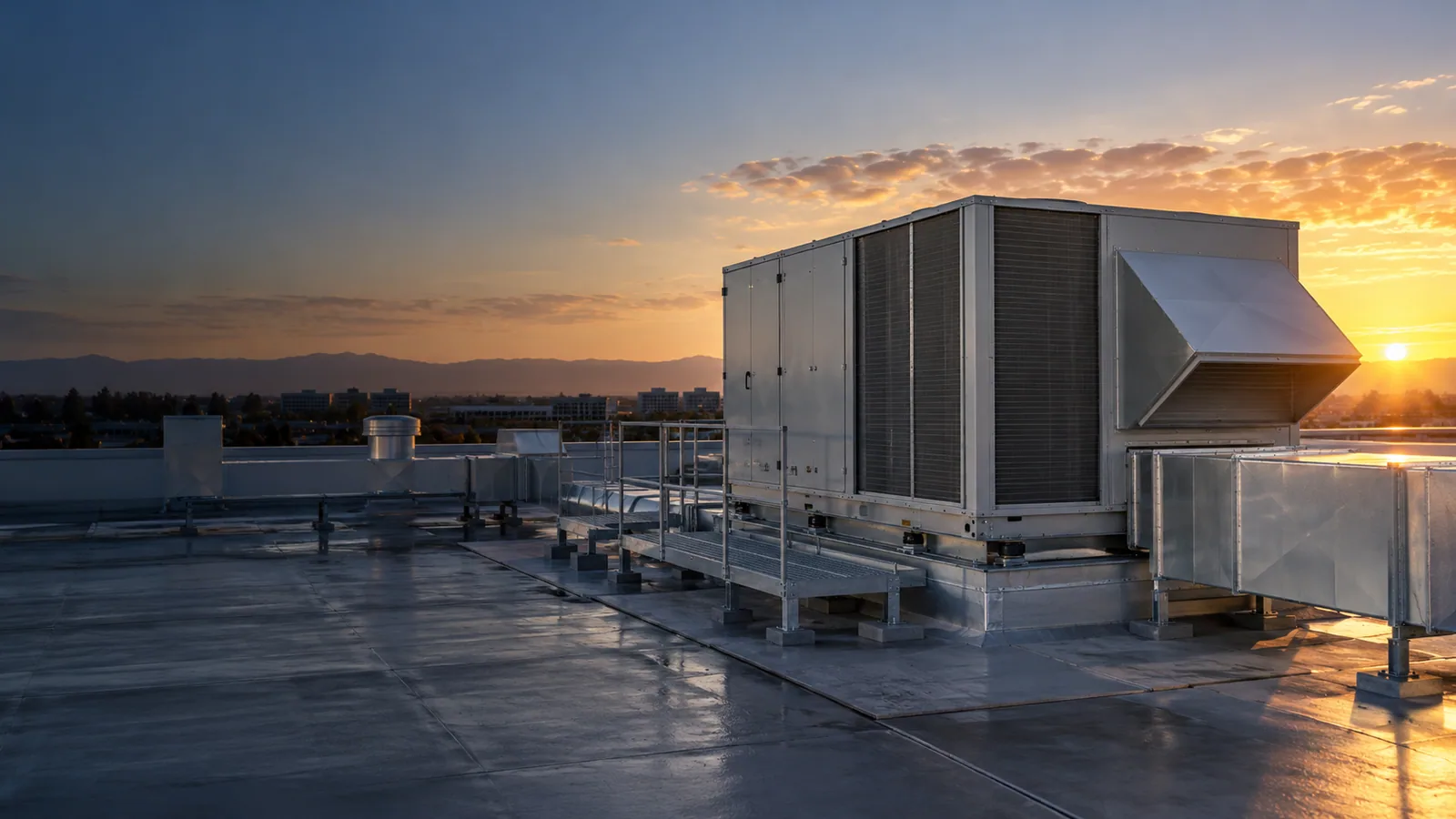
Commercial rooftop units
Commercial guidance with direct answers, useful observations, and clear next steps.
Updated
Quick answer
For rooftop equipment, document the unit inventory, capacity, condition, controls, economizer, ventilation, filters, belts and drives where applicable, coils, drainage, electrical condition, heating section, curb and roof interface, access, and service clearances. A replacement scope should also address load, airflow, outside air, controls integration, structural and rigging needs, permits, downtime, startup, and commissioning.
Understand the issue
A rooftop unit serves a building system, not just a thermostat. Loads, ventilation, economizer operation, roof access, curbs, drainage, electrical supply, and controls all affect service and replacement decisions.
Your questions, answered
What should be checked on a rooftop unit?
Include filters, coils, fans, belts where fitted, drains, controls, heating components, safeties, and outdoor-air or economizer operation. Document performance and defects against the manufacturer's requirements and building operating needs.
How often should commercial RTUs be maintained?
Set intervals from manufacturer guidance, operating hours, contamination, season, and criticality. A seasonal visit may be useful, but high-duty or dirty environments can require more frequent tasks.
What belongs in an RTU replacement scope?
Include load review, matched capacity, curb and structural compatibility, duct connections, electrical and fuel work, ventilation, controls, lifting, permits, commissioning, and closeout. Identify temporary service and weatherproofing responsibilities.
Why is a rooftop unit short cycling?
Possible causes include controls, airflow restrictions, protective trips, or unsuitable capacity. Trend the thermostat demand, operating state, and alarms so a technician can distinguish normal staging from an interrupted cycle.
How do I compare rooftop HVAC proposals?
Compare the full installed scope, efficiency and capacity data, outdoor-air provisions, controls integration, access, warranty, and acceptance testing. A replacement model number alone does not establish an equivalent project.
What to do next
When to get help
Use qualified commercial personnel for rooftop access and service. Roof structure, lifting, fall protection, fuel, electrical, and refrigerant work need appropriate specialists and site planning.
Sources and further reading
These references support the topic's technical background. For equipment-specific procedures, use the instructions for the exact model; for permits and compliance, check with the responsible local authority.
Educational guidance from HVACentric. Conditions at a property require direct assessment; these pages do not diagnose equipment or certify an installation.