HVAC ANSWERS · COMMERCIAL AND INDUSTRIAL HVAC
Industrial mechanical fabrication and prefabrication
Industrial guidance with direct answers, useful observations, and clear next steps.
Updated
Quick answer
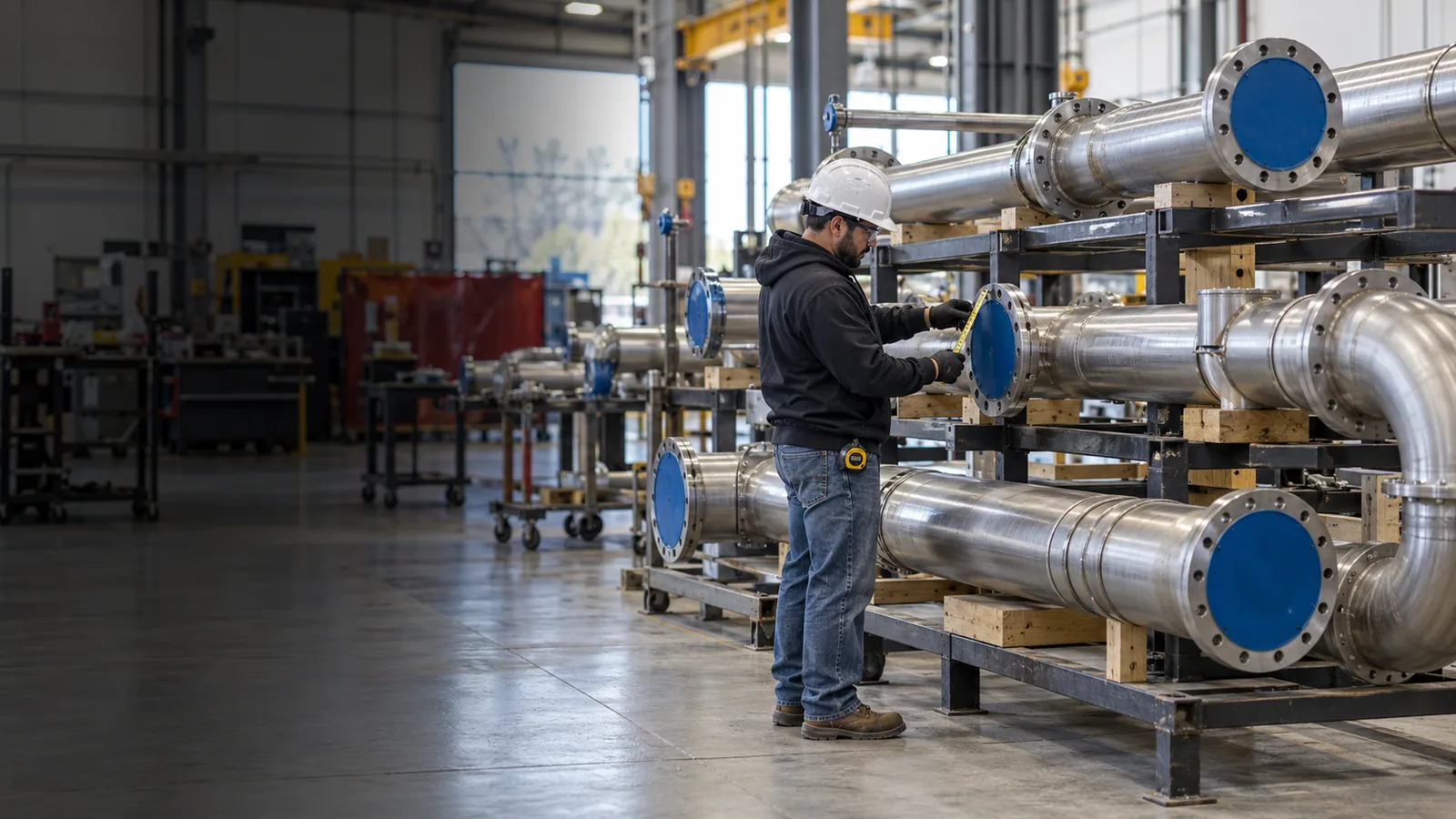
Prefabrication should begin only after the design, field conditions, interfaces, tolerances, access, lifting, and installation sequence are mature enough for controlled release. Define material traceability, qualified joining procedures and personnel, dimensional inspection, examination, cleanliness, preservation, identification, nonconformance control, shipping, receiving, and field acceptance. The goal is not simply moving labor off site; it is producing assemblies that are safe, code-compliant, installable, maintainable, and supported by complete records.
Understand the issue
Prefabrication reduces field uncertainty only when design and field interfaces are ready. Quality planning must cover what is made, how conformity is demonstrated, and how the assembly remains identifiable and protected until installation.
Your questions, answered
How should we plan industrial mechanical prefabrication?
Plan assemblies around verified design, field dimensions, connection points, tolerances, access, lifting, shipping, and installation sequence. Identify inspection and owner approval points before fabrication begins.
What belongs in a mechanical fabrication quality plan?
Include material identification, traceability, qualified procedures and personnel, dimensional checks, examination, cleanliness, nonconformance control, preservation, and records. Match requirements to the actual service and applicable specification.
When should piping spools or mechanical skids be released for fabrication?
Release only when the design and interfaces are sufficiently resolved for controlled production. Mark approved revisions, unresolved holds, and change responsibilities; an early release without field verification can create expensive rework.
How do we prevent prefabricated assemblies from not fitting in the field?
Use verified surveys, coordinated models or drawings, tolerance checks, connection-control documents, and installation planning. Inspect critical dimensions before shipment and manage changes after release through a documented process.
What should we verify before selecting a mechanical fabrication contractor?
Check relevant service experience, procedure and personnel qualifications, inspection capability, capacity, material control, documentation, and nonconformance handling. Review sample turnover records and who owns field-fit problems.
What to do next
When to get help
Use qualified fabrication, engineering, inspection, and lifting specialists as appropriate. A shop capability claim does not establish compliance with the project's material, joining, or examination requirements.
Sources and further reading
These references support the topic's technical background. For equipment-specific procedures, use the instructions for the exact model; for permits and compliance, check with the responsible local authority.
Educational guidance from HVACentric. Conditions at a property require direct assessment; these pages do not diagnose equipment or certify an installation.