HVAC ANSWERS · COMMERCIAL AND INDUSTRIAL HVAC
Industrial ventilation
Industrial guidance with direct answers, useful observations, and clear next steps.
Updated
Quick answer
Industrial ventilation must be based on the process, contaminants, generation rate, capture method, worker exposure, makeup air, discharge location, pressure relationships, fire or explosion hazards, controls, monitoring, and applicable regulations. General comfort HVAC is not a substitute for engineered source capture. Use qualified industrial ventilation and safety professionals for hazardous processes.
Understand the issue
Industrial ventilation begins with the process and exposure mechanism. Airflow must control contaminants at the source without creating new pressure, fire, explosion, product, or worker-exposure problems elsewhere.
Your questions, answered
How do I scope industrial ventilation?
Document the process, contaminant, generation rate and pattern, worker positions, operating states, and applicable requirements. Define capture, transport, treatment, discharge, replacement air, and measured acceptance as one system.
What is local exhaust ventilation?
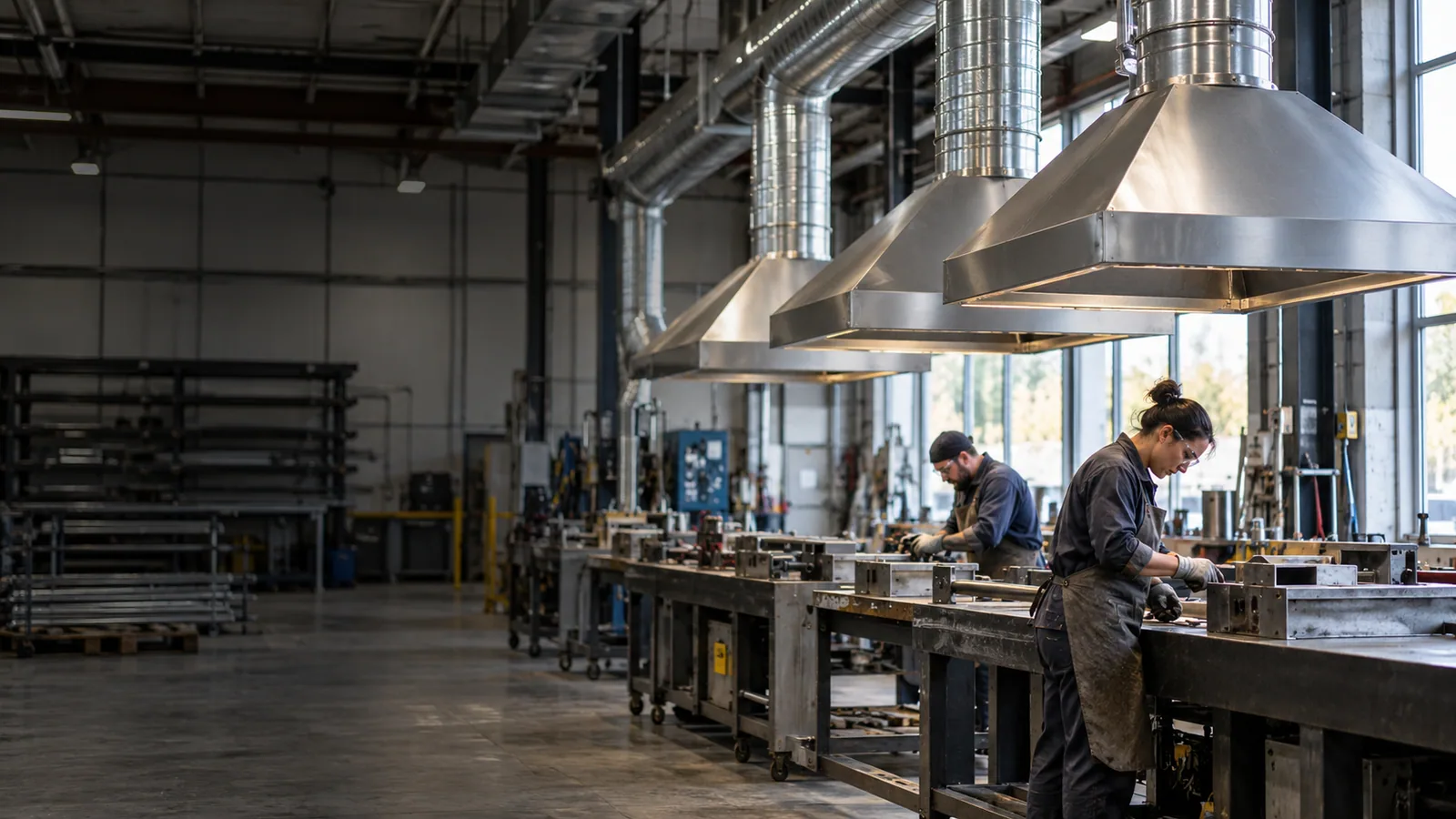
Local exhaust removes contaminants close to their source using a hood or enclosure, duct, cleaner where needed, and fan. It is different from diluting contaminants after they have spread through a room.
Does exhaust require makeup air?
Exhausted air must be replaced through a planned path. Uncontrolled replacement air can create unwanted pressure differences, drafts, or combustion problems; coordinate supply, exhaust, and adjacent spaces.
How should fumes be captured at the source?
Locate and shape the hood or enclosure to intercept emissions before they reach workers. Process motion, cross-drafts, source distance, and access all affect capture; fan size alone is not a design.
Who should evaluate a dust collection system?
Use qualified industrial ventilation and combustible-dust expertise where relevant, with process and EHS participation. Identify material hazards and protection requirements before modifying collectors, ducts, or operating rates.
What to do next
When to get help
Industrial ventilation needs competent engineering and occupational-safety assessment. Do not improvise fan additions or recirculate hazardous exhaust without a qualified design.
Sources and further reading
These references support the topic's technical background. For equipment-specific procedures, use the instructions for the exact model; for permits and compliance, check with the responsible local authority.
Educational guidance from HVACentric. Conditions at a property require direct assessment; these pages do not diagnose equipment or certify an installation.