HVAC ANSWERS · COMMERCIAL AND INDUSTRIAL HVAC
Industrial ventilation and local exhaust systems
Industrial guidance with direct answers, useful observations, and clear next steps.
Updated
Quick answer
Industrial ventilation should begin with the process, contaminant, generation mechanism, worker and product exposure, operating states, and applicable safety and environmental requirements. Capture the contaminant as close to its source as practical, then design the hood, airflow, duct transport, air cleaner, fan, discharge, and replacement air as one system. Verify pressure relationships, fire or explosion hazards, controls, monitoring, maintenance access, and failure response. Commission performance at the process with documented airflow and exposure evidence rather than accepting fan operation alone.
Understand the issue
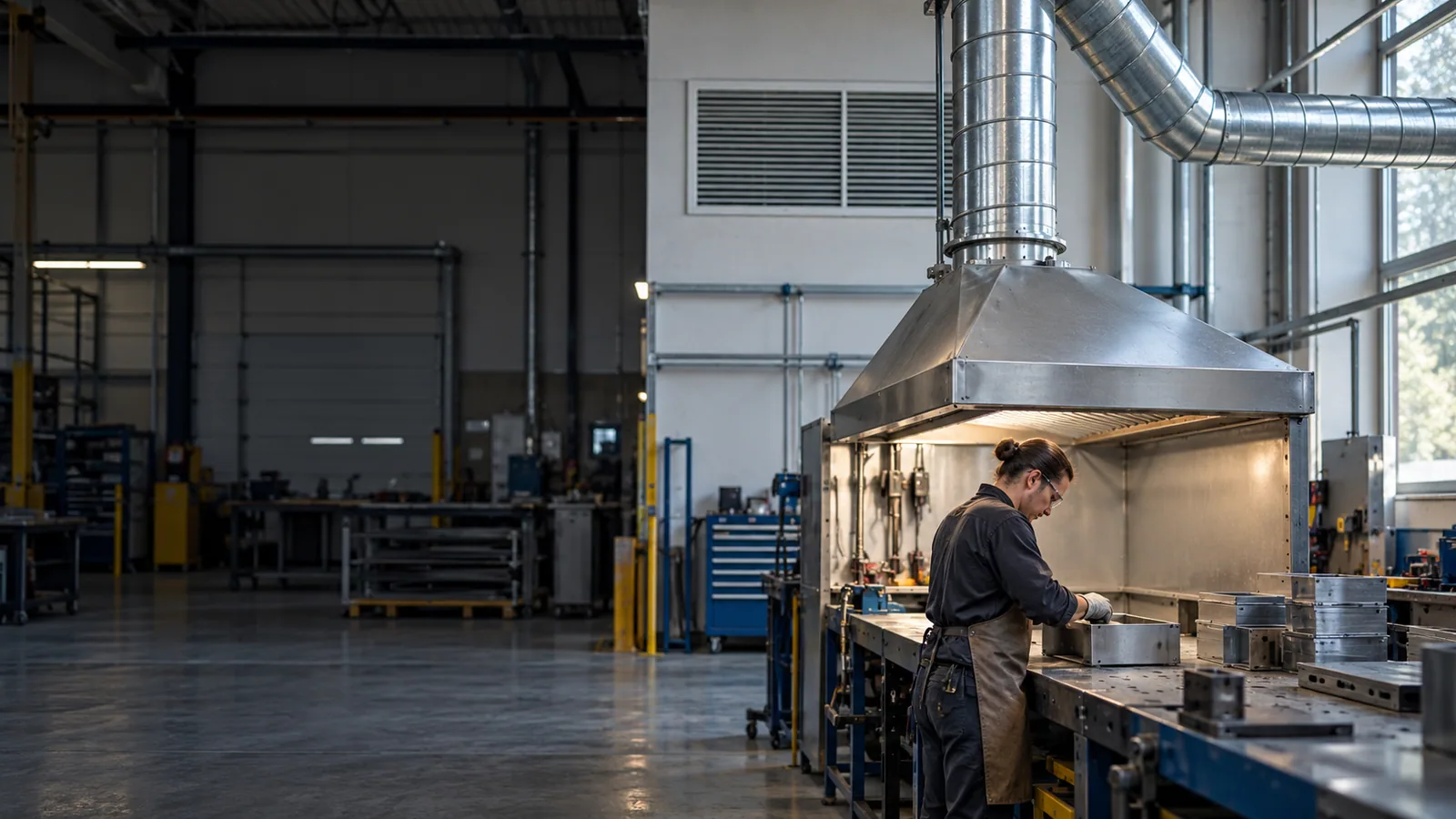
Local exhaust should capture emissions before they pass through the worker's breathing zone. The hood, duct, cleaner, fan, discharge, and replacement-air system must work together across actual production conditions.
Your questions, answered
How should we scope an industrial local exhaust ventilation system?
Define contaminants, source behavior, worker positions, operating cases, capture needs, transport, treatment, discharge, replacement air, and safety constraints. Set measurable acceptance criteria at the process, not just a fan airflow target.
What makes a capture hood effective?
Effectiveness depends on hood geometry, enclosure, proximity, source momentum, cross-drafts, and how the work is performed. Increasing fan size alone may not capture emissions if the hood is badly positioned.
How should makeup air be coordinated with industrial exhaust?
Replace exhausted air through a designed supply path that does not defeat capture or create unwanted pressure relationships. Coordinate with building ventilation, combustion appliances, adjacent rooms, and process requirements.
What should be tested when commissioning an industrial ventilation system?
Verify capture under representative operations, airflow and pressures, replacement-air behavior, alarms, controls, failure response, and applicable exposure measures. Record the baseline so future inspections can detect deterioration.
How do we qualify an industrial ventilation contractor?
Look for relevant process and contaminant experience, design capability, safety expertise, testing methods, and documentation. Ask who evaluates combustible hazards, environmental discharge, and worker exposure when those apply.
What to do next
When to get help
Qualified ventilation engineers and occupational-hygiene or EHS specialists should evaluate hazardous processes. Do not use this overview to set capture velocities or authorize recirculation.
Sources and further reading
These references support the topic's technical background. For equipment-specific procedures, use the instructions for the exact model; for permits and compliance, check with the responsible local authority.
Educational guidance from HVACentric. Conditions at a property require direct assessment; these pages do not diagnose equipment or certify an installation.