HVAC ANSWERS · INDOOR AIR QUALITY
Mold and HVAC
All guidance with direct answers, useful observations, and clear next steps.
Updated
Quick answer
Mold requires moisture, so the priority is finding and correcting the water or humidity source. HVAC work may be part of the solution when drainage, coils, insulation, ducts, or humidity control are involved, but a filter or air cleaner does not correct active moisture. Large, recurring, hidden, or health-sensitive situations may require a qualified mold or indoor-environment professional in addition to HVAC service.
Understand the issue
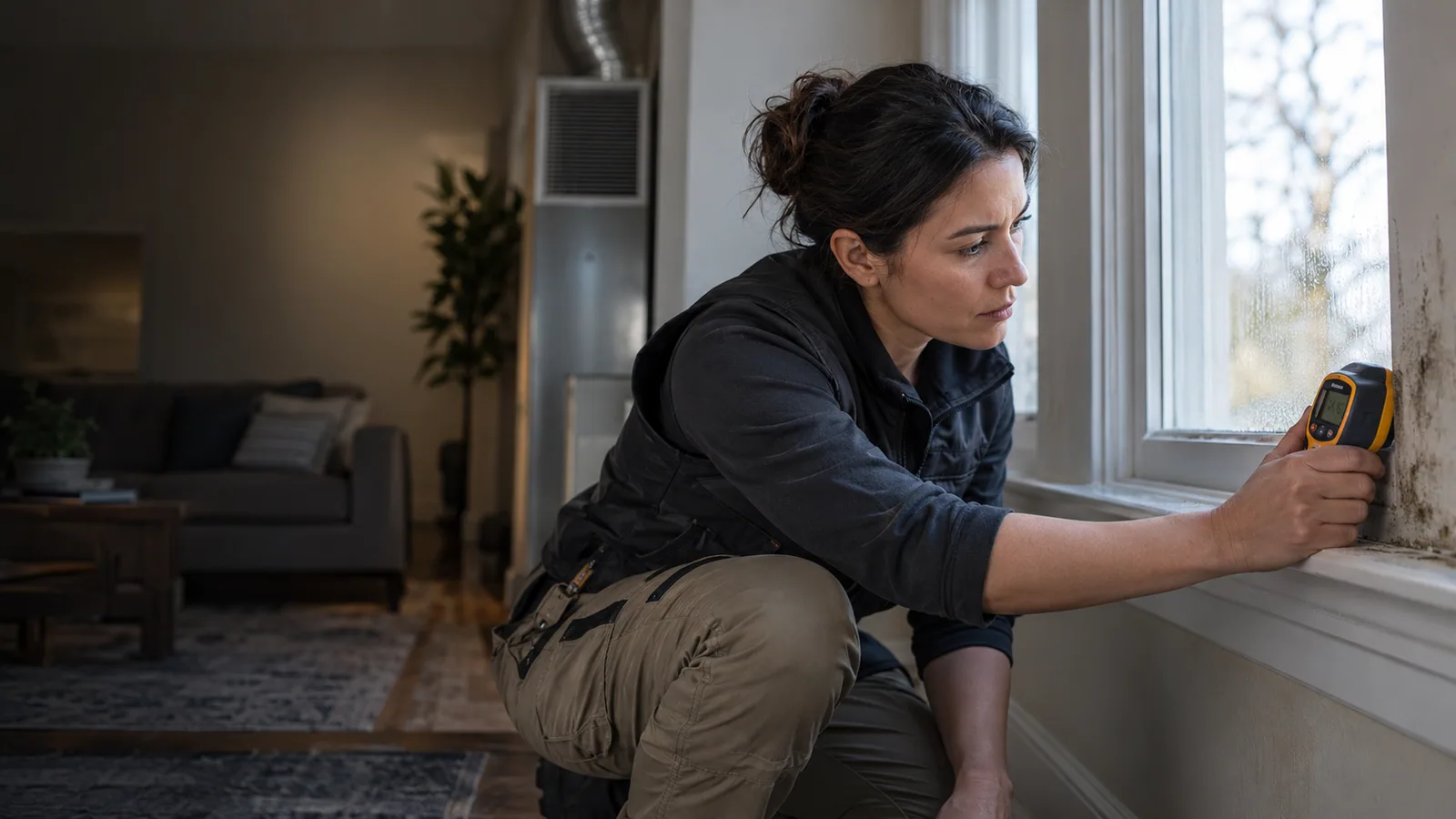
Visible discoloration and musty odor are reasons to investigate, not enough to identify a material or map the extent of contamination. A durable response addresses moisture, affected materials, and any involvement of the air-distribution system.
Your questions, answered
Can HVAC spread mold?
A contaminated HVAC system can distribute particles through a building. If system contamination is suspected, do not operate the affected equipment until it has been evaluated and a suitable response determined.
I see mold near an air vent.
Document the location without disturbing the material. Investigate condensation, leaks, and surrounding surfaces; staining near a vent is not by itself proof that the entire duct system is contaminated.
Should an HVAC contractor remove mold?
An HVAC contractor can address equipment and moisture-related faults, but remediation competence is a separate consideration. The extent, materials, and contamination source determine whether a specialist is needed.
Is there mold in my ductwork?
You cannot establish hidden duct contamination from a register photo alone. Ask for evidence of the affected area and the moisture cause, with qualified assessment where material identification is uncertain.
Will a new filter fix a mold problem?
No. Filtration does not remove established growth or correct the moisture that supports it. A new filter may capture some particles, but the water problem and affected materials still need attention.
What to do next
When to get help
Use experienced remediation professionals for extensive, hidden, or contaminated-water damage. Health concerns belong with a healthcare professional; appearance alone cannot establish exposure or medical effects.
Sources and further reading
These references support the topic's technical background. For equipment-specific procedures, use the instructions for the exact model; for permits and compliance, check with the responsible local authority.
Educational guidance from HVACentric. Conditions at a property require direct assessment; these pages do not diagnose equipment or certify an installation.