HVAC ANSWERS · COMFORT AND AIRFLOW
Return-air vents and airflow
All guidance with direct answers, useful observations, and clear next steps.
Updated
Quick answer
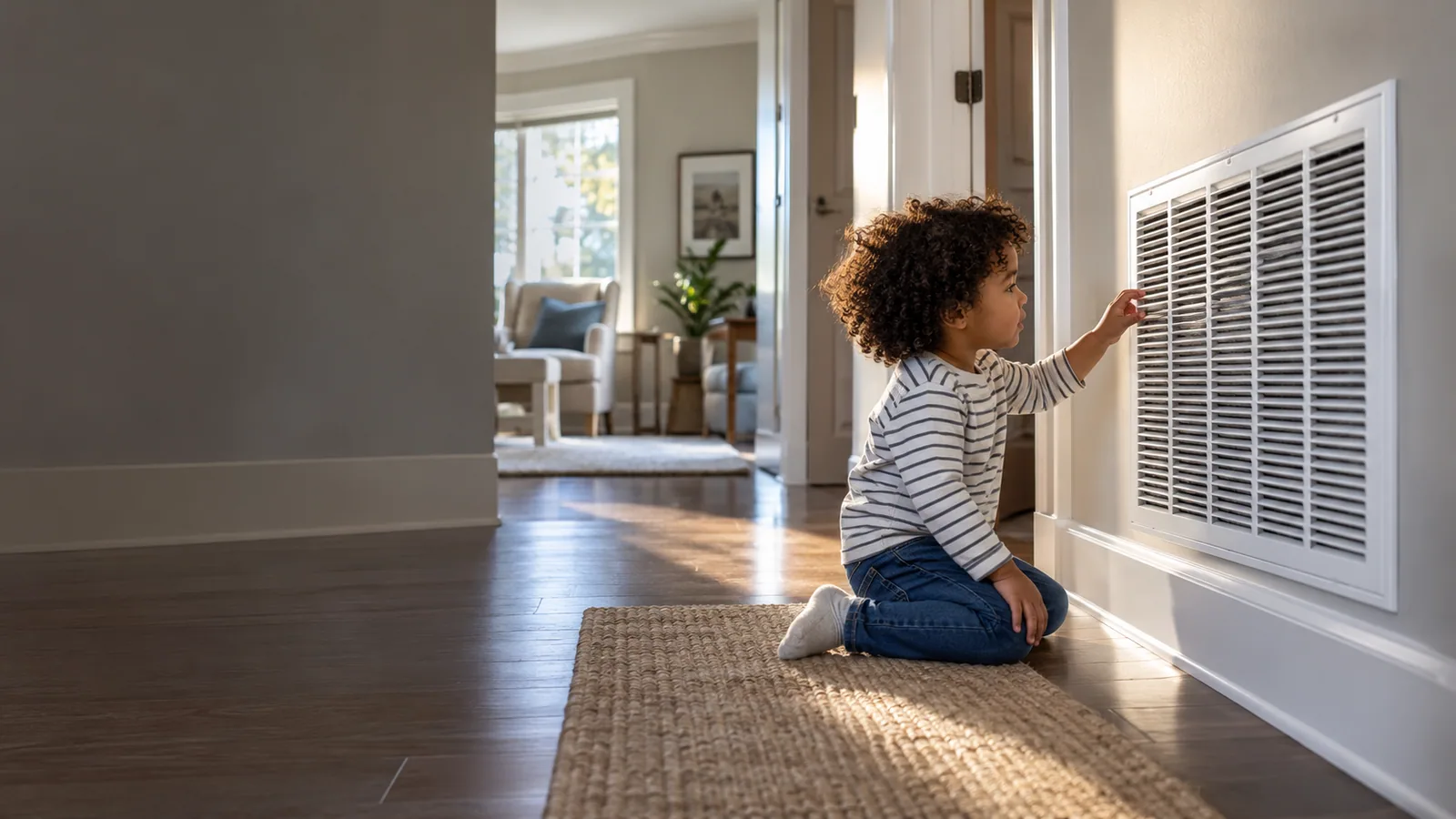
Return-air paths carry indoor air back to the equipment so it can be conditioned and circulated again. Blocking a return or restricting room-to-room return paths can reduce airflow and contribute to pressure and comfort problems. The number and placement of returns vary by design, so an airflow assessment should consider both supply delivery and the return path.
Understand the issue
A forced-air system needs a complete circulation path: supply air enters rooms and return air gets back to the equipment. A closed door or blocked return path can disturb that circulation even when supply registers are open.
Your questions, answered
What does a return-air vent do?
A return grille collects room air and carries it back to the air handler for filtration and conditioning. It is part of the circulation system, not normally a source of outdoor ventilation air.
Can I block a return vent with furniture?
Keep furniture, rugs, and stored items clear of returns. Covering them can restrict circulation and change pressures; it is not an effective way to redirect heating or cooling.
Why is there only one large return grille?
Some systems use a central return rather than individual room returns. That design still needs adequate paths from rooms to the central grille, particularly when doors are closed.
Should every room have a return-air path?
Rooms need an adequate return-air path, but that does not always mean a separate return grille. Transfer openings, jump ducts, or other designed paths may be used where appropriate.
How do return vents affect HVAC airflow?
Supply and return restrictions both affect the blower's working conditions. Diagnosing weak airflow should include return paths, filter pressure drop, duct condition, and delivered air rather than inspecting supplies alone.
What to do next
When to get help
A contractor should assess persistent room pressure differences, noisy returns, or inadequate airflow. Do not cut new openings or use wall cavities as returns without a proper design.
Sources and further reading
These references support the topic's technical background. For equipment-specific procedures, use the instructions for the exact model; for permits and compliance, check with the responsible local authority.
Educational guidance from HVACentric. Conditions at a property require direct assessment; these pages do not diagnose equipment or certify an installation.