HVAC ANSWERS · COOLING AND HEATING PROBLEMS
AC blowing warm air
Residential guidance with direct answers, useful observations, and clear next steps.
Updated
Quick answer
An air conditioner can run without cooling properly for several reasons, including thermostat settings, restricted airflow, an outdoor-unit problem, coil condition, controls, or the refrigerant circuit. Check only basic user items such as the thermostat mode, obvious filter restriction, and blocked registers. If cooling does not return, a qualified technician should evaluate the complete system rather than adding refrigerant without finding the cause.
Understand the issue
Moving air and removing heat are different jobs. A running indoor fan confirms air movement, but it does not establish that the outdoor equipment, refrigerant circuit, or controls are providing cooling. The pattern of the failure helps narrow the investigation.
Your questions, answered
Why is my AC blowing warm air?
Possible causes include the wrong thermostat mode, restricted airflow, dirty coils, an outdoor-unit fault, or a refrigerant problem. Warm air alone cannot identify which component has failed.
The air conditioner is running but not cooling.
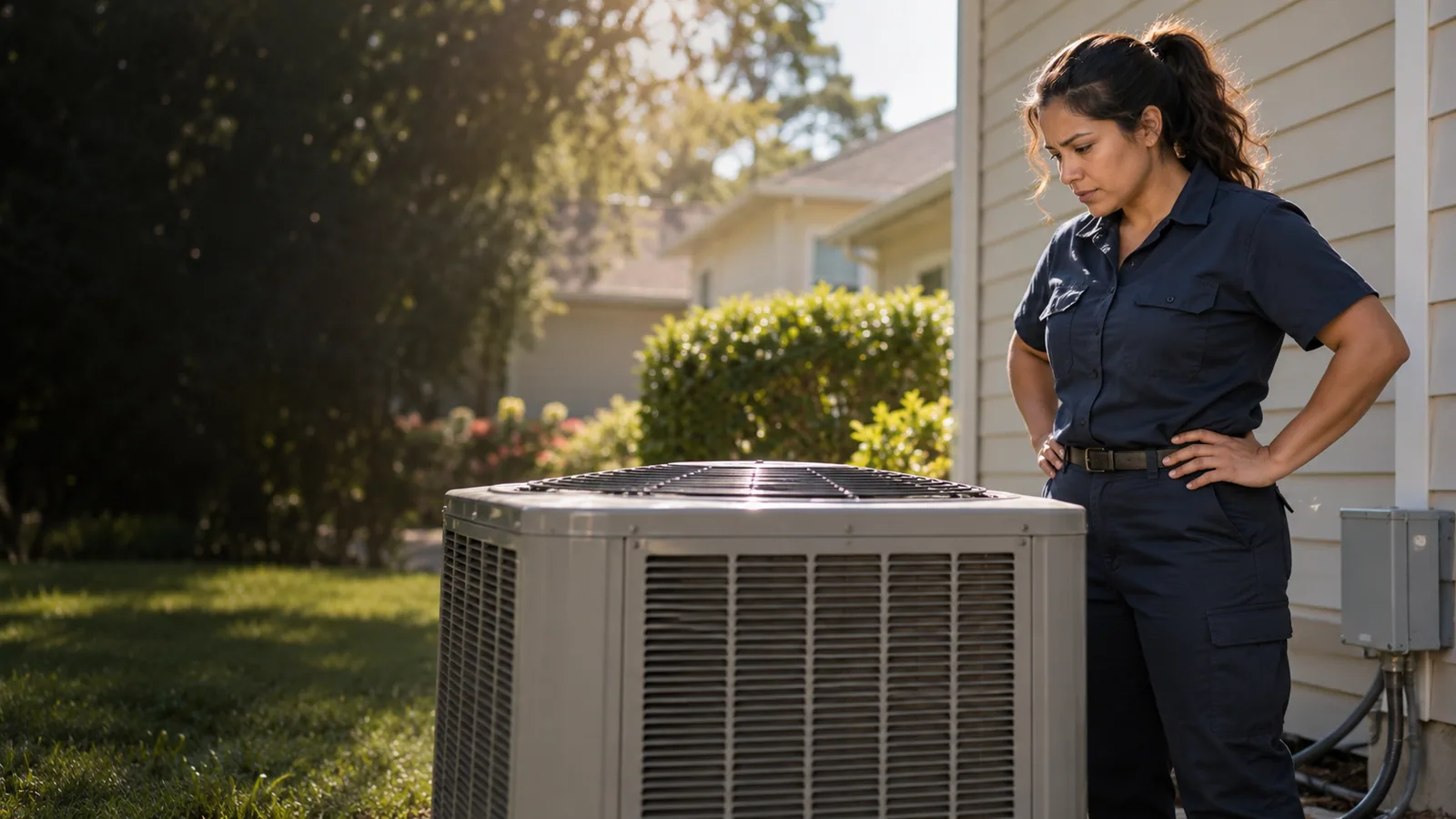
Check whether the thermostat is actually calling for cooling rather than operating the fan alone. Record whether the outdoor unit appears to operate, observing from a safe distance without removing covers.
Warm air is coming from my vents.
Notice whether every supply register is affected or only one room. A whole-house change suggests a different investigation from a single hot room with a duct or distribution problem.
Why isn't my cooling system making cold air?
A technician should establish airflow and equipment operation before interpreting refrigerant measurements. Request the measurements and diagnosis rather than approving a refrigerant recharge based only on warm supply air.
My AC runs but the house stays hot.
Compare indoor temperature over time with the setpoint and outdoor conditions. If temperature keeps rising despite continuous cooling, arrange service; lowering the setpoint further will not increase a conventional unit's cooling capacity.
What to do next
When to get help
Arrange service when basic settings and filter checks do not restore cooling. Stop operation for ice, burning odors, or repeated trips; do not keep resetting protective devices.
Sources and further reading
These references support the topic's technical background. For equipment-specific procedures, use the instructions for the exact model; for permits and compliance, check with the responsible local authority.
Educational guidance from HVACentric. Conditions at a property require direct assessment; these pages do not diagnose equipment or certify an installation.