HVAC ANSWERS · COOLING AND HEATING PROBLEMS
HVAC condensate drains
All guidance with direct answers, useful observations, and clear next steps.
Updated
Quick answer
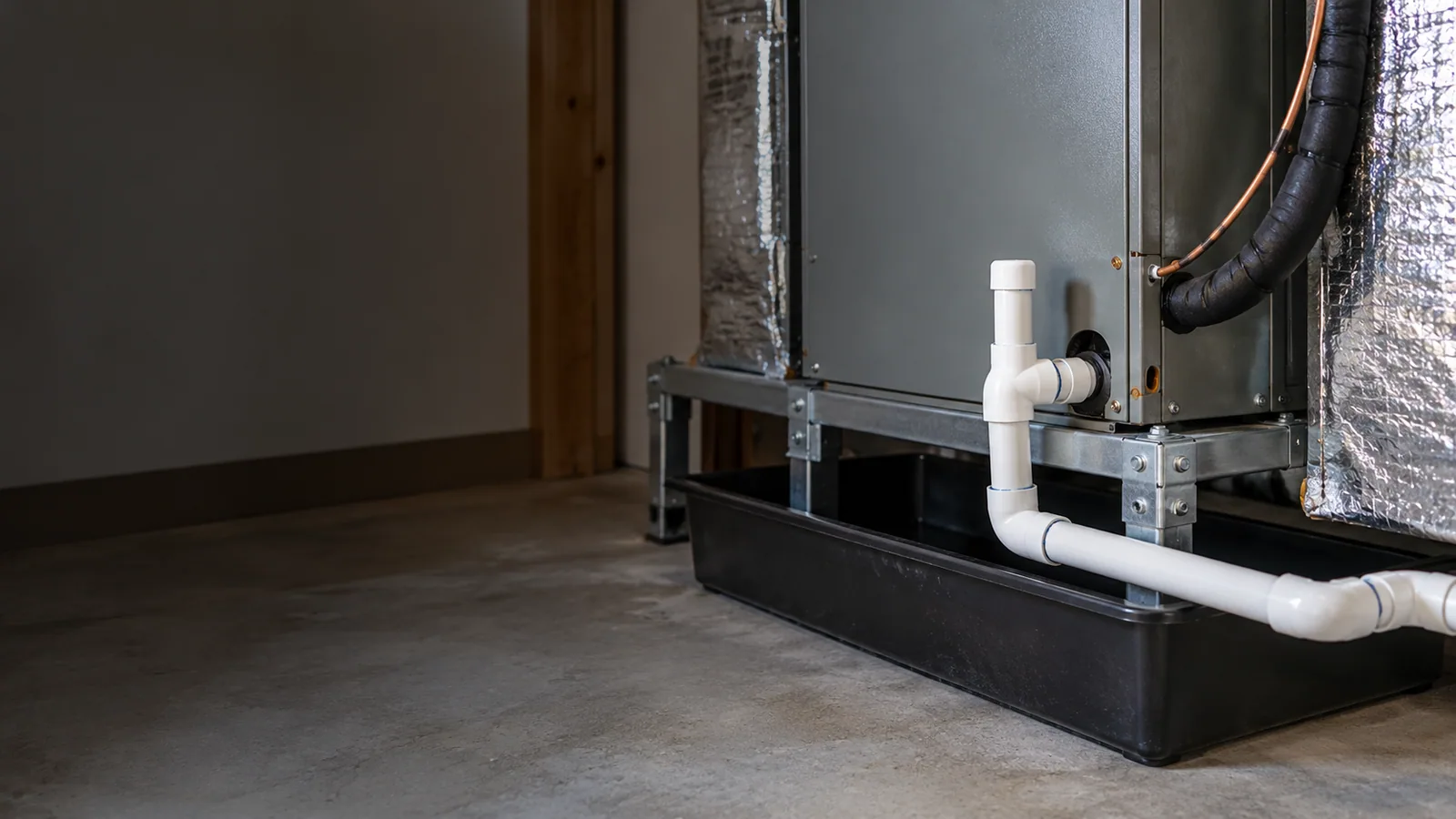
Cooling equipment removes moisture from the air, and that water must drain through the pan and condensate system. A blockage, damaged pan, failed pump, poor slope, or frozen coil can cause water or trigger a safety switch. Shut the system down if water threatens electrical equipment or the building, and correct both the drainage problem and its underlying cause.
Understand the issue
When a cooling coil removes moisture from air, a pan and drain carry that water away. Some installations use a pump or overflow protection. Water at the equipment may reflect a drain problem, but a frozen coil or damaged pan can produce similar symptoms.
Your questions, answered
Why does my AC condensate drain keep clogging?
Recurring blockage may involve deposits, biological growth, poor slope, a trap problem, or a failing pump. Clearing a blockage without evaluating the drain arrangement may only provide temporary relief.
What does an HVAC float switch do?
A float switch detects a rising water level and can stop equipment before overflow. Its operation is a protective signal, not a reason to bypass the switch and restart cooling.
Water is backing up in the drain pan.
Standing water in a secondary pan or an overflowing primary pan needs attention. If leakage threatens electrical equipment or the building, stop the system using a safe accessible control and arrange service.
Should condensate drain during cooling?
Condensate commonly forms during cooling when indoor air contains enough moisture. The amount varies with conditions; the absence of visible drainage alone does not establish a fault or a refrigerant problem.
Why did a clogged drain shut off my AC?
The shutoff may be the overflow protection doing its job. Restore proper drainage and investigate why water accumulated before resetting the equipment according to its instructions.
What to do next
When to get help
A persistent backup, damaged pan, failed pump, or repeated float-switch trip needs service. Do not add drain chemicals or alter traps without equipment-specific guidance.
Sources and further reading
These references support the topic's technical background. For equipment-specific procedures, use the instructions for the exact model; for permits and compliance, check with the responsible local authority.
Educational guidance from HVACentric. Conditions at a property require direct assessment; these pages do not diagnose equipment or certify an installation.