HVAC ANSWERS · COOLING AND HEATING PROBLEMS
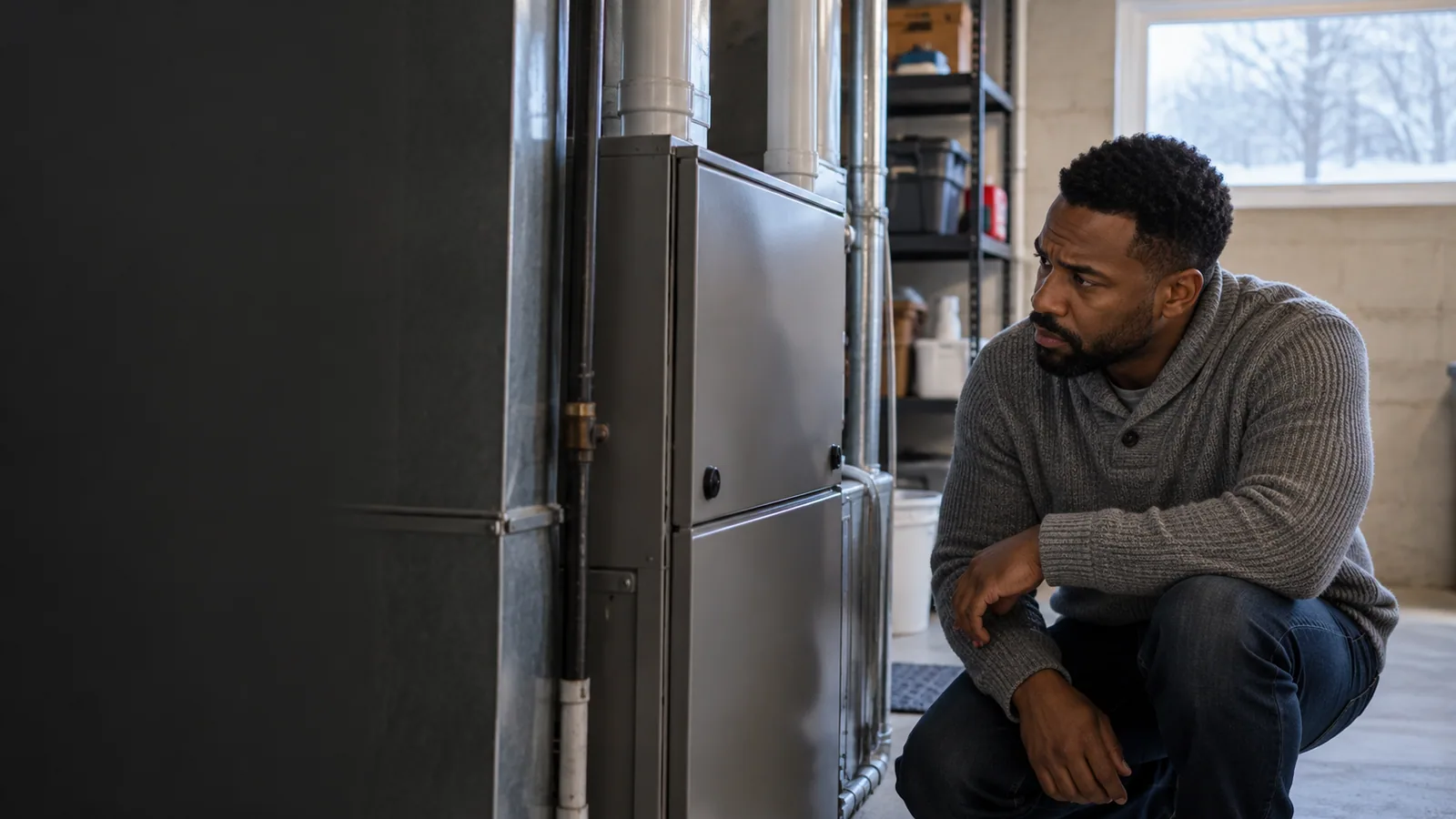
Heating system not producing heat
Residential guidance with direct answers, useful observations, and clear next steps.
Updated
Quick answer
Start with safe, visible checks: confirm the thermostat is calling for heat, the system has normal power, and the filter is not obviously blocked. Do not open combustion, fuel, or energized electrical compartments. If heat does not return, or if there is a gas odor, carbon-monoxide alarm, smoke, or repeated breaker trip, stop and follow the appropriate emergency response before arranging qualified service.
Understand the issue
A heating failure may occur before startup, during ignition, or after the blower starts. Identifying that stage is more useful than assuming the thermostat or furnace needs replacement. Heat pumps and fuel-burning furnaces also produce heat differently.
Your questions, answered
Why is my furnace not producing heat?
A furnace may not receive a heat demand, may be locked out, or may stop because of an ignition, airflow, venting, or safety problem. Do not bypass switches or attempt internal fuel-system repairs.
The heater is running but the house is cold.
A running fan does not prove that burners, electric heaters, or a heat-pump compressor are producing heat. Note whether the air ever becomes warmer and whether the room temperature rises.
My heating system will not turn on.
Confirm heat mode, the programmed schedule, and thermostat batteries if applicable. Note a blank display or visible fault code. Repeated breaker trips or repeated lockouts require diagnosis rather than repeated resets.
Why is cold air coming from the furnace?
Fan-only operation, a failed heating sequence, or a control problem can produce cool air. With heat pumps, supply air can feel cooler than furnace air while still heating the home; check temperature progress.
I have no heat in the house.
First rule out an emergency: a gas odor, CO alarm, smoke, or suspected fire requires leaving and calling emergency assistance from outside. Without those signs, arrange qualified service and protect occupants from unsafe cold.
What to do next
When to get help
Persistent loss of heat needs qualified service. Never use an oven, grill, generator, or other unvented combustion equipment to heat an occupied home.
Sources and further reading
These references support the topic's technical background. For equipment-specific procedures, use the instructions for the exact model; for permits and compliance, check with the responsible local authority.
Educational guidance from HVACentric. Conditions at a property require direct assessment; these pages do not diagnose equipment or certify an installation.