HVAC ANSWERS · COOLING AND HEATING PROBLEMS
Carbon-monoxide alarms and gas odors
All guidance with direct answers, useful observations, and clear next steps.
Updated
Quick answer
Carbon monoxide is colorless and odorless, so do not use smell to judge whether it is present. If a carbon-monoxide alarm sounds, follow the alarm and emergency guidance and move to fresh air; if you smell or hear leaking gas, leave immediately and contact the gas authority or emergency services from outside without operating switches or electronics. Contractor research comes only after the immediate safety risk is addressed.
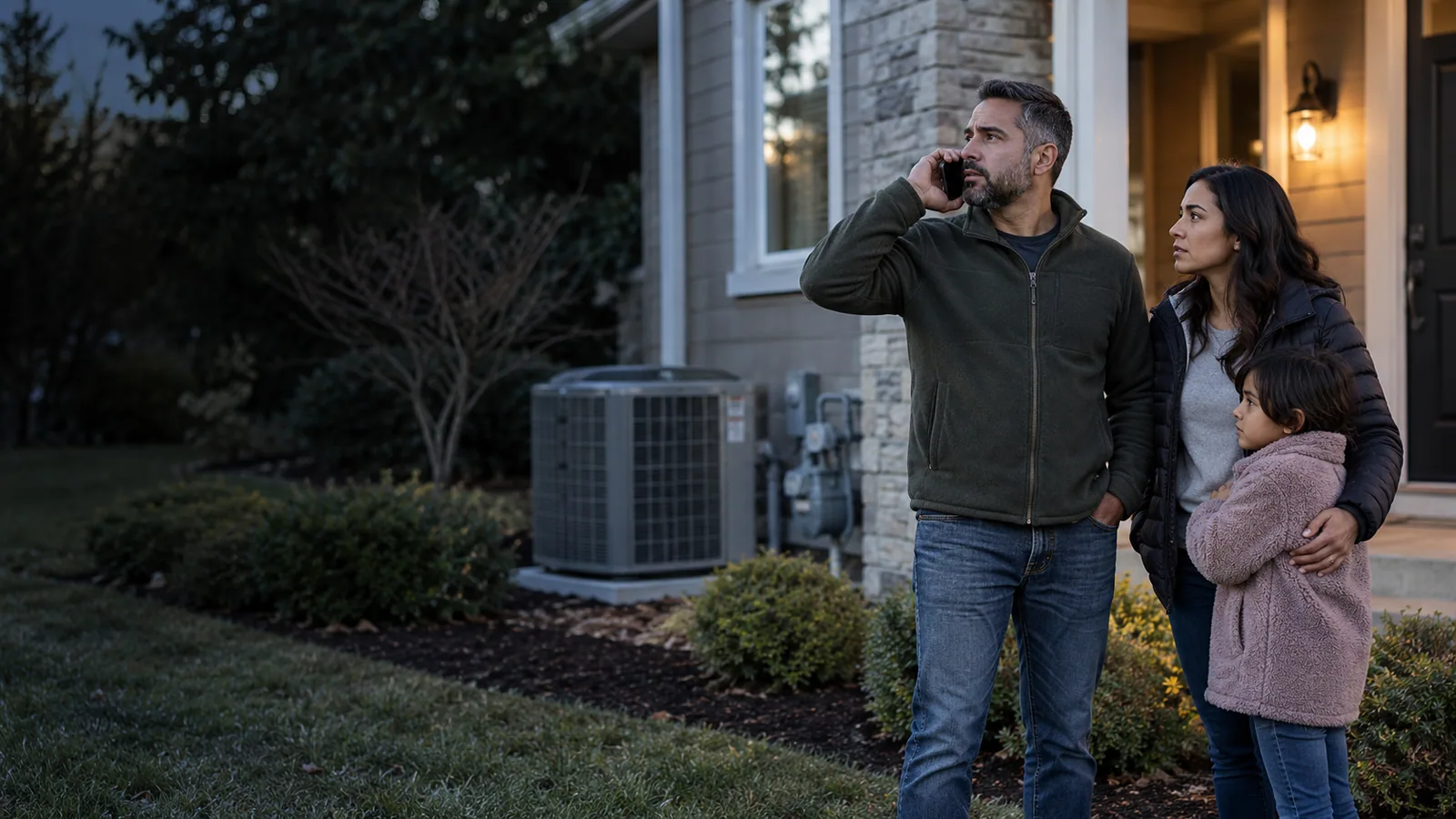
Leave first. Call from outside.
Emergency responders and the gas utility handle the immediate hazard. A qualified technician should investigate the equipment only after safe access is established.
- Leave the building and get other occupants outside.
- Call emergency assistance from a safe location outside.
- Wait for clearance before returning or arranging equipment restart.
Understand the issue
A carbon-monoxide alarm and a suspected fuel-gas leak require immediate action. Neither should be handled as an ordinary comfort complaint. Do not remain inside to find the source, reset equipment, or finish troubleshooting.
Your questions, answered
What should I do if the carbon-monoxide alarm sounds?
Move everyone to fresh air outside immediately and call emergency services from outside. Do not re-enter until responders say it is safe, even if the alarm stops or occupants feel better.
I smell gas near the furnace.
Leave immediately. Do not operate lights, switches, appliances, or a phone inside, and do not try to locate or repair the leak. Call the gas utility's emergency line or emergency services from outside.
Can you smell carbon monoxide?
No. Carbon monoxide has no smell or color. An absence of odor cannot establish safety; working CO alarms and proper fuel-burning-equipment maintenance are important protections.
Is a rotten-egg odor an HVAC problem?
A rotten-egg odor can indicate odorized fuel gas, although other sources exist. Treat a suspected gas leak as an emergency rather than trying to distinguish causes while remaining inside.
Should I call an HVAC contractor first for a gas leak?
No. First leave and contact emergency responders or the gas utility from outside. Equipment diagnosis and repair come after the immediate hazard has been assessed and the area cleared for access.
Sources and further reading
These references support the topic's technical background. For equipment-specific procedures, use the instructions for the exact model; for permits and compliance, check with the responsible local authority.
Educational guidance from HVACentric. Conditions at a property require direct assessment; these pages do not diagnose equipment or certify an installation.