HVAC ANSWERS · COOLING AND HEATING PROBLEMS
Unusual HVAC noises
All guidance with direct answers, useful observations, and clear next steps.
Updated
Quick answer
A new or worsening noise deserves attention because different sounds can come from panels, airflow, motors, bearings, electrical components, refrigerant flow, duct movement, or debris. Stop operating the equipment if there is grinding, smoke, a burning odor, repeated breaker trips, or evidence of a loose moving part. Record when the sound occurs and let a qualified technician inspect it instead of opening energized equipment.
Understand the issue
The type of sound and the stage of operation provide useful clues, but noise alone is not a diagnosis. A new mechanical sound, an electrical buzz, and a combustion-related bang call for different investigations.
Your questions, answered
Why does my AC bang when it starts?
A startup bang can originate in moving equipment, duct movement, or other faults. If a fuel-burning appliance bangs at ignition, stop using it and arrange qualified service rather than experimenting with repeated starts.
The furnace is making a rattling noise.
Rattling can come from loose panels, ductwork, or internal moving components. Note where it is loudest without removing guards or reaching into equipment; internal inspection belongs to qualified personnel.
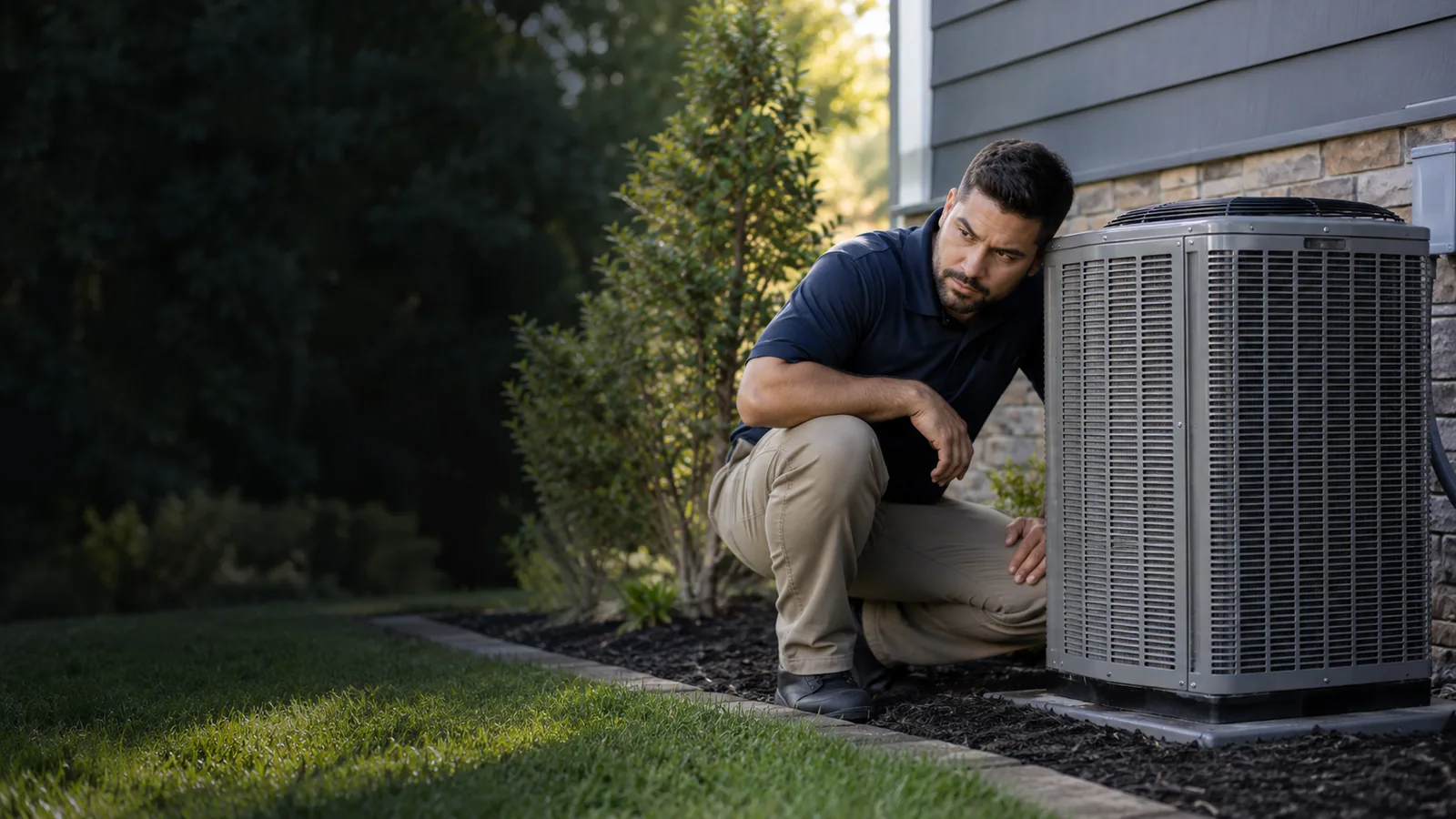
My outdoor unit is buzzing loudly.
A loud new buzz may involve electrical components, a stalled motor, or vibration. Do not touch contactors, capacitors, or wiring. Shut down safely if the equipment cannot start or the sound is abnormal.
What causes HVAC squealing?
Squealing may involve belts, bearings, or other moving parts, depending on the equipment. Lubrication is not a universal fix; many motors are not designed for field oiling.
The system makes a grinding sound.
Grinding suggests possible mechanical contact or deterioration. Stop operation and seek service instead of running the unit to capture a longer recording or waiting for a complete failure.
What to do next
When to get help
Grinding, failed starts, burning odors, or ignition bangs require prompt professional attention. Suspected gas leaks or CO alarms require immediate evacuation and emergency assistance.
Sources and further reading
These references support the topic's technical background. For equipment-specific procedures, use the instructions for the exact model; for permits and compliance, check with the responsible local authority.
Educational guidance from HVACentric. Conditions at a property require direct assessment; these pages do not diagnose equipment or certify an installation.