HVAC ANSWERS · COOLING AND HEATING PROBLEMS
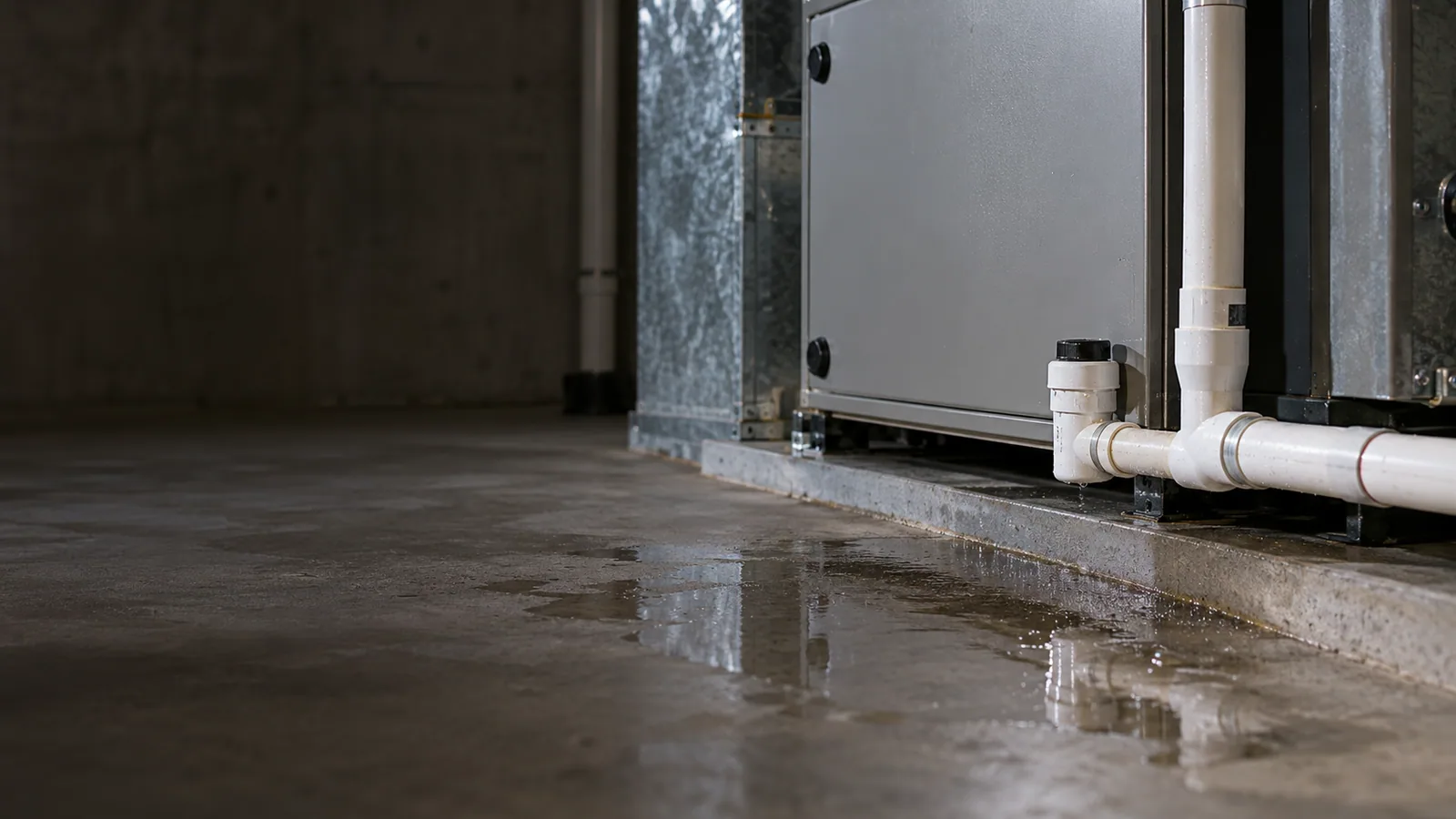
Water near HVAC equipment
All guidance with direct answers, useful observations, and clear next steps.
Updated
Quick answer
Water around HVAC equipment can damage the building and may involve a blocked or damaged condensate drain, drain pan, pump, frozen coil, insulation problem, or another moisture source. Shut the system down if water is reaching electrical components or causing ceiling damage. Have the drainage and the reason for excess moisture checked rather than treating only the puddle.
Understand the issue
Cooling produces condensate, but water should remain within the designed collection and drainage path. Leakage can also come from melting ice, an external plumbing source, or condensation on cold surfaces, so identify where it begins.
Your questions, answered
Why is water leaking from my air handler?
Possible causes include a blocked drain, damaged pan, pump failure, installation problem, or a thawing coil. Stop operation if water threatens wiring, ceilings, or other building materials.
There is a puddle under the AC.
Photograph the puddle and visible source from a safe location. Water under the unit does not establish that the drain alone is clogged; ask for inspection of the pan, drain, pump, and coil.
My condensate drain keeps backing up.
A recurring backup suggests the underlying drain arrangement, contamination, pump, or upstream condition may remain unresolved. Request a root-cause explanation and a drainage test after correction.
Water is dripping from an HVAC vent.
Water at a register may involve condensation, insufficient duct insulation, a nearby leak, or water traveling from another location. Have the source traced rather than assuming the register needs replacement.
The indoor unit is leaking water.
Treat ongoing leakage as a building-protection issue. Note when it occurs and whether cooling is running, then have drainage, coil condition, and installation evaluated together.
What to do next
When to get help
Arrange prompt service for active leakage or repeated overflow. Do not bypass a float switch or conceal water damage before the source has been corrected.
Sources and further reading
These references support the topic's technical background. For equipment-specific procedures, use the instructions for the exact model; for permits and compliance, check with the responsible local authority.
Educational guidance from HVACentric. Conditions at a property require direct assessment; these pages do not diagnose equipment or certify an installation.